Orton-Gillingham Manual: A Comprehensive Overview (Updated April 30, 2026)
Orton-Gillingham is a highly adaptable, evidence-based approach to literacy instruction, prioritizing individualized learning and sequential skill development for struggling readers and spellers.

What is the Orton-Gillingham Approach?
The Orton-Gillingham (OG) Approach isn’t a rigid program, but rather a set of principles for multisensory literacy instruction. It’s designed for individuals—including those with dyslexia—who struggle with reading, writing, and spelling. OG is direct, explicit, multisensory, structured, sequential, diagnostic, and prescriptive, meaning instruction is carefully planned and tailored to each learner’s specific needs.
Unlike many classroom methods, OG deeply considers how the brain learns to read. It utilizes sight, hearing, touch, and movement simultaneously to reinforce learning. A trained instructor guides each lesson, adapting to the student’s progress and challenges. This individualized approach focuses on building foundational skills in a logical, cumulative manner, ensuring mastery before moving forward. OG emphasizes emotional support alongside skill development, creating a positive learning environment.
Historical Background of Orton-Gillingham
The Orton-Gillingham Approach emerged from the work of Dr. Samuel T. Orton and Anna Gillingham in the mid-20th century. Dr. Orton, a neuropsychiatrist, observed patterns in students struggling with reading, linking their difficulties to neurological differences. He recognized that traditional teaching methods often failed these learners.

Anna Gillingham, an educator, collaborated with Dr. Orton to develop a systematic, multisensory approach to address these challenges; Their combined expertise led to a methodology focused on the structure of language and how it’s processed by the brain. Early work centered on students with severe reading difficulties, particularly those later diagnosed with dyslexia.

The approach continued to evolve through the contributions of other educators and researchers, solidifying its place as a foundational intervention for literacy challenges.
Core Principles of the Orton-Gillingham Approach
The Orton-Gillingham Approach is built upon several key principles that distinguish it from other reading methodologies. It is fundamentally direct and explicit, meaning concepts are taught clearly and systematically, leaving no room for guessing. Multisensory learning is central, engaging sight, hearing, touch, and movement to reinforce understanding.
A structured and sequential methodology ensures skills are introduced in a logical order, building upon previously learned concepts. Crucially, the approach is diagnostic and prescriptive; instruction is tailored to the individual student’s specific needs, identified through ongoing assessment. This personalized approach allows for targeted intervention.
These principles work in concert to create a powerful learning experience, particularly for students who struggle with literacy.
Direct and Explicit Instruction
Direct and explicit instruction forms the cornerstone of the Orton-Gillingham Approach. Unlike implicit methods relying on incidental learning, OG presents concepts in a clear, unambiguous manner. Teachers explicitly teach each skill, breaking down complex tasks into smaller, manageable steps. No assumption is made about prior knowledge; everything is systematically presented.
This involves a teacher-led approach, with ample modeling and guided practice. Students aren’t left to “discover” rules; they are directly taught them. Concepts are introduced one at a time, with repeated practice and review to ensure mastery.

This deliberate and focused approach minimizes confusion and maximizes learning efficiency, especially for students with dyslexia or other learning differences.
Multisensory Learning
Multisensory learning is a defining characteristic of the Orton-Gillingham Approach, engaging multiple senses – sight, hearing, touch, and movement – simultaneously. This isn’t simply about using different activities; it’s about deliberately connecting concepts to sensory experiences to strengthen neural pathways.
For example, students might trace letters in sand while saying the sound, or build words with manipulatives. This kinesthetic and tactile involvement enhances memory and understanding. Visual aids, auditory cues, and physical actions are interwoven throughout lessons.

By activating various parts of the brain, multisensory instruction creates stronger, more durable learning. It caters to diverse learning styles and bypasses weaknesses, making it particularly effective for students who struggle with traditional methods.
Structured and Sequential Methodology
Structured Literacy, a cornerstone of Orton-Gillingham, emphasizes a carefully planned and logical progression of skills; Instruction doesn’t happen randomly; concepts are introduced in a deliberate sequence, building upon previously learned material. This systematic approach ensures students have a solid foundation before moving on to more complex skills.
The methodology breaks down reading and spelling into smaller, manageable components, such as phonemes, graphemes, and syllable types. Each concept is explicitly taught and practiced until mastery is achieved. This prevents gaps in knowledge and fosters confidence.

This sequential nature is crucial for students with dyslexia or other learning differences, providing the necessary scaffolding for success. It’s a predictable and reliable learning path.
Diagnostic and Prescriptive Teaching
Orton-Gillingham isn’t a “one-size-fits-all” program; it’s fundamentally diagnostic. A skilled instructor continuously assesses the student’s strengths and weaknesses in real-time, identifying specific areas of difficulty. This isn’t just initial testing, but ongoing observation throughout each lesson.
Based on this ongoing assessment, instruction becomes prescriptive. Lessons are tailored to address the individual student’s needs, focusing on the skills they haven’t yet mastered. The instructor adapts the pace and content to ensure optimal learning.
This individualized approach means a student struggling with a specific vowel sound will receive targeted practice, while another might focus on syllable division. It’s about meeting the learner where they are and providing precisely what they need to progress.
Key Components of an Orton-Gillingham Lesson
Orton-Gillingham lessons are carefully structured and build upon previously learned concepts. A typical lesson incorporates several key components, beginning with phonological awareness training – activities that focus on sounds within words. This is followed by explicit phonics instruction, systematically teaching letter-sound correspondences.
Fluency development is crucial, moving from isolated sounds to reading connected text. Vocabulary building expands the student’s understanding of word meanings, while reading comprehension strategies help them make sense of what they read.
These components aren’t taught in isolation; they are interwoven to create a comprehensive literacy experience. The lesson’s sequence is deliberate, ensuring a solid foundation for future learning and addressing individual student needs.
Phonological Awareness Training
Phonological awareness forms the bedrock of the Orton-Gillingham approach, focusing on the sounds within language. Training begins with larger units – words in a sentence, then syllables within words – before narrowing to individual phonemes, the smallest units of sound.
Activities include rhyming, segmenting words into sounds (e.g., /c/ /a/ /t/), blending sounds to form words, and manipulating sounds within words. These exercises are crucial for students who struggle to connect sounds with letters.
This training isn’t about reading or spelling yet; it’s about developing auditory skills. It’s a foundational step, preparing the brain to decode and encode written language effectively, and is delivered in a direct and explicit manner.
Phonics Instruction
Phonics instruction within the Orton-Gillingham approach is systematic and explicit, directly teaching the relationships between letters and sounds. It moves from simple to complex, beginning with consonant-vowel-consonant (CVC) words and gradually introducing more intricate patterns like digraphs, blends, and vowel teams.
Each sound-symbol association is taught with a multisensory approach – students see the letter, hear the sound, say the sound, and often trace the letter while saying it. This reinforces learning through multiple pathways.
Decoding and encoding skills are developed concurrently, allowing students to both read and spell words accurately. Regular review and practice are essential to solidify these foundational skills, ensuring automaticity.
Fluency Development
Fluency development in the Orton-Gillingham approach isn’t simply about reading quickly; it’s about achieving accurate, automatic, and prosodic reading. Initial focus is on decoding accuracy, ensuring students can correctly identify words before speed is addressed.
Repeated readings of controlled texts – passages with a high proportion of previously taught phonics patterns – are a cornerstone of fluency practice. This builds confidence and automaticity. Choral reading and partner reading are also utilized.
Emphasis is placed on phrasing and expression, encouraging students to read with appropriate intonation and attention to punctuation. This enhances comprehension alongside speed and accuracy, fostering a genuine love for reading.
Vocabulary Building
Vocabulary building within the Orton-Gillingham framework is systematic and directly linked to phonics instruction. New words aren’t presented in isolation; instead, they are decoded using previously learned sound-spelling patterns. This reinforces both decoding skills and vocabulary acquisition.
Morphological awareness – understanding prefixes, suffixes, and root words – is a key component. Students learn how these word parts contribute to meaning, enabling them to decipher unfamiliar words independently. Explicit instruction in multiple meanings of words is also provided.
Contextualization is crucial; words are encountered in meaningful sentences and passages, promoting deeper understanding and retention. Activities like semantic mapping and word sorts further solidify vocabulary knowledge.
Reading Comprehension Strategies
Reading comprehension in Orton-Gillingham isn’t treated as a separate skill, but rather as an outcome of strong decoding and vocabulary knowledge. As students become proficient at accurately and fluently reading words, they can focus cognitive energy on understanding the text’s meaning.
Strategies are explicitly taught and modeled, including identifying the main idea, sequencing events, making inferences, and visualizing. Questions are posed during reading, not just after, to encourage active engagement.
Retelling activities are frequently used to assess comprehension and identify areas needing further support. Emphasis is placed on understanding text structure and recognizing author’s purpose. The goal is to cultivate thoughtful, active readers.
Individualization and Adaptation in Orton-Gillingham
Orton-Gillingham’s strength lies in its adaptability; it’s not a rigid program, but a flexible approach guided by a trained instructor. Lessons are meticulously tailored to each learner’s specific needs, strengths, and weaknesses, identified through ongoing diagnostic assessment.
This means pacing, content, and the types of multisensory activities used are all adjusted. For example, a student struggling with vowel sounds might receive more focused practice using tactile methods, while another might benefit from kinesthetic activities.
The instructor continuously monitors progress and modifies instruction accordingly, ensuring the student is appropriately challenged and supported. This responsiveness is crucial for maximizing learning outcomes.
Orton-Gillingham for Students with Dyslexia
Orton-Gillingham is particularly effective for students with dyslexia, as it directly addresses the phonological deficits often associated with this learning difference. The approach’s explicit and systematic instruction in phonological awareness, phonics, and decoding skills builds a strong foundation for reading and spelling.
By utilizing a multisensory approach – engaging sight, hearing, touch, and movement – it caters to diverse learning styles and strengthens neural pathways crucial for literacy. The diagnostic and prescriptive nature of OG allows instructors to pinpoint specific areas of difficulty and target instruction accordingly.
This targeted intervention helps students overcome reading challenges and develop confidence in their literacy abilities, fostering a positive learning experience.
The Role of the Trained Instructor
A highly trained instructor is the cornerstone of successful Orton-Gillingham implementation. Unlike rigid programs, OG relies on a skilled professional to adapt lessons to each learner’s unique needs and progress. This requires extensive knowledge of language structure, phonetics, and effective multisensory techniques.
The instructor continuously assesses student understanding, adjusting instruction based on observed strengths and weaknesses. They deliver direct, explicit teaching, ensuring students grasp foundational concepts before moving forward.
Furthermore, a trained OG instructor creates a supportive and emotionally safe learning environment, fostering student confidence and motivation. Their expertise ensures the approach is implemented with fidelity and maximizes its potential for positive outcomes.
Resources and Training for Orton-Gillingham Practitioners
Becoming a proficient Orton-Gillingham practitioner necessitates comprehensive training and ongoing professional development. The Academy of Orton-Gillingham Practitioners and Educators (AOGPE) is a primary source for certification and standards. Numerous other organizations offer courses, workshops, and mentorship opportunities.
Resources include detailed manuals outlining the approach’s principles and techniques, as well as materials for multisensory activities. Online platforms and professional communities provide access to current research, best practices, and collaborative support.
Continued learning is crucial, as the field evolves and new insights emerge. Dedicated practitioners actively seek opportunities to refine their skills and stay abreast of advancements in literacy instruction.

Comparing Orton-Gillingham to Other Reading Interventions

Orton-Gillingham (OG) distinguishes itself from many reading interventions through its intensely structured, explicit, and multisensory approach. Unlike whole language or balanced literacy, OG directly teaches the relationships between sounds and letters, building a strong phonological foundation.
Compared to some remedial programs, OG is not a pre-packaged curriculum but a methodology adaptable to individual needs. While programs like Reading Recovery focus on early intervention, OG addresses a wider range of reading difficulties, including dyslexia, across various ages.
OG’s diagnostic-prescriptive nature allows for targeted instruction, unlike more generalized interventions. Its emphasis on simultaneous engagement of multiple senses sets it apart, fostering deeper learning and retention.
Effectiveness and Research Supporting Orton-Gillingham
The Orton-Gillingham approach boasts a long-standing reputation as an effective intervention, particularly for individuals with dyslexia. While large-scale, randomized controlled trials specifically isolating “Orton-Gillingham” are limited – due to its adaptable nature – research consistently supports its core principles.
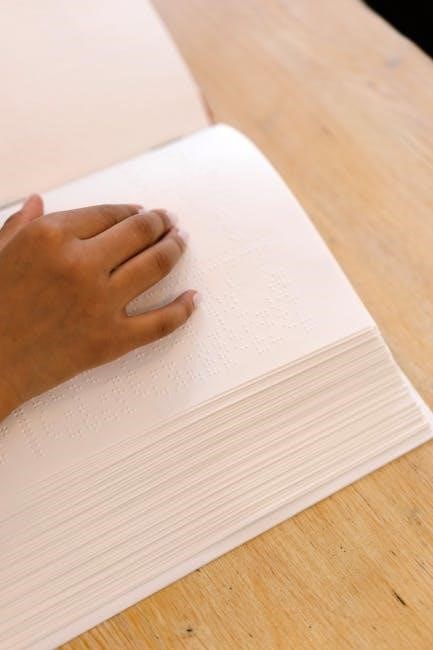
Studies demonstrate the efficacy of structured literacy, a framework closely aligned with OG, in improving phonological awareness, decoding skills, and reading fluency. Multisensory learning, a cornerstone of OG, is also backed by neurological research showing enhanced memory and learning through multiple sensory pathways.
Positive outcomes are frequently observed in students receiving OG-based instruction, showcasing significant gains in reading and spelling abilities. The approach’s individualized and diagnostic components contribute to its success, tailoring instruction to specific learning needs.
Implementing Orton-Gillingham in Different Settings
Orton-Gillingham’s adaptable nature allows for successful implementation across diverse educational environments; It’s not confined to specialized clinics; OG principles can be integrated into general education classrooms, resource rooms, and even homeschooling settings.
Successful implementation requires a well-trained instructor capable of diagnostic assessment and individualized lesson planning. In schools, this may involve dedicated OG specialists or teachers receiving comprehensive professional development. Modifications are often necessary to fit within existing curriculum frameworks and classroom structures.
Smaller group or one-on-one settings often yield the most significant results, allowing for focused attention and personalized instruction. However, OG-aligned strategies can also benefit larger classrooms through differentiated instruction and targeted interventions.